



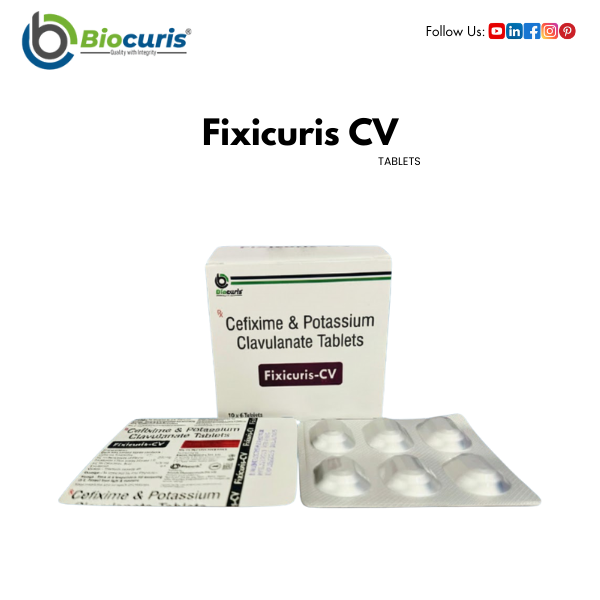
Packaging
10×6 Alu-Alu
Fixicuris-CV by Biocuris is a powerful antibiotic combination containing Cefixime (200mg) and Potassium Clavulanate (125mg). Cefixime is a third-generation cephalosporin that inhibits bacterial cell wall synthesis, leading to bacterial cell death. However, many bacteria produce an enzyme called beta-lactamase that destroys cefixime before it can work. Potassium clavulanate is a beta-lactamase inhibitor that binds to and inactivates this enzyme, thereby protecting cefixime and extending its antibacterial spectrum.
This synergistic combination makes Fixicuris CV highly effective against resistant strains of bacteria that would otherwise be unresponsive to cefixime alone. It is indicated for the treatment of a wide range of infections including acute and chronic bronchitis, community-acquired pneumonia, sinusitis, tonsillitis, pharyngitis, otitis media (middle ear infection), urinary tract infections (UTIs), uncomplicated gonorrhea, and certain skin and soft tissue infections.
Manufactured under Biocuris’s “Quality with Integrity” standard, each tablet delivers consistent potency and purity. The typical adult dosage is one tablet twice daily (every 12 hours), preferably with food to enhance absorption and reduce gastrointestinal side effects. Complete the full course as prescribed, even if symptoms improve early, to prevent the development of antibiotic resistance.
Overcomes beta-lactamase resistant bacteria
Broad-spectrum coverage for mixed infections
Effective against respiratory & ENT infections
Treats urinary tract & gynecological infections
Dual-action for enhanced antibacterial potency
1. Why is clavulanate added to cefixime?
Clavulanate inhibits beta-lactamase enzymes that bacteria produce to destroy cefixime, making the antibiotic effective against resistant bacteria.
2. Can I take Fixicuris CV with food?
Yes, taking it with food improves absorption and reduces the risk of stomach upset or nausea.
3. How long does it take to work?
Most patients see symptom improvement within 48–72 hours, but always complete the full prescribed course (typically 5–10 days).
4. Is it safe for people with penicillin allergy?
There is possible cross-reactivity (about 5-10%). Inform your doctor about any penicillin allergy before taking this medication.
5. What should I do if I experience severe diarrhea?
Stop taking the medicine immediately and consult your doctor, as it could be a sign of antibiotic-associated colitis (C. difficile infection).